
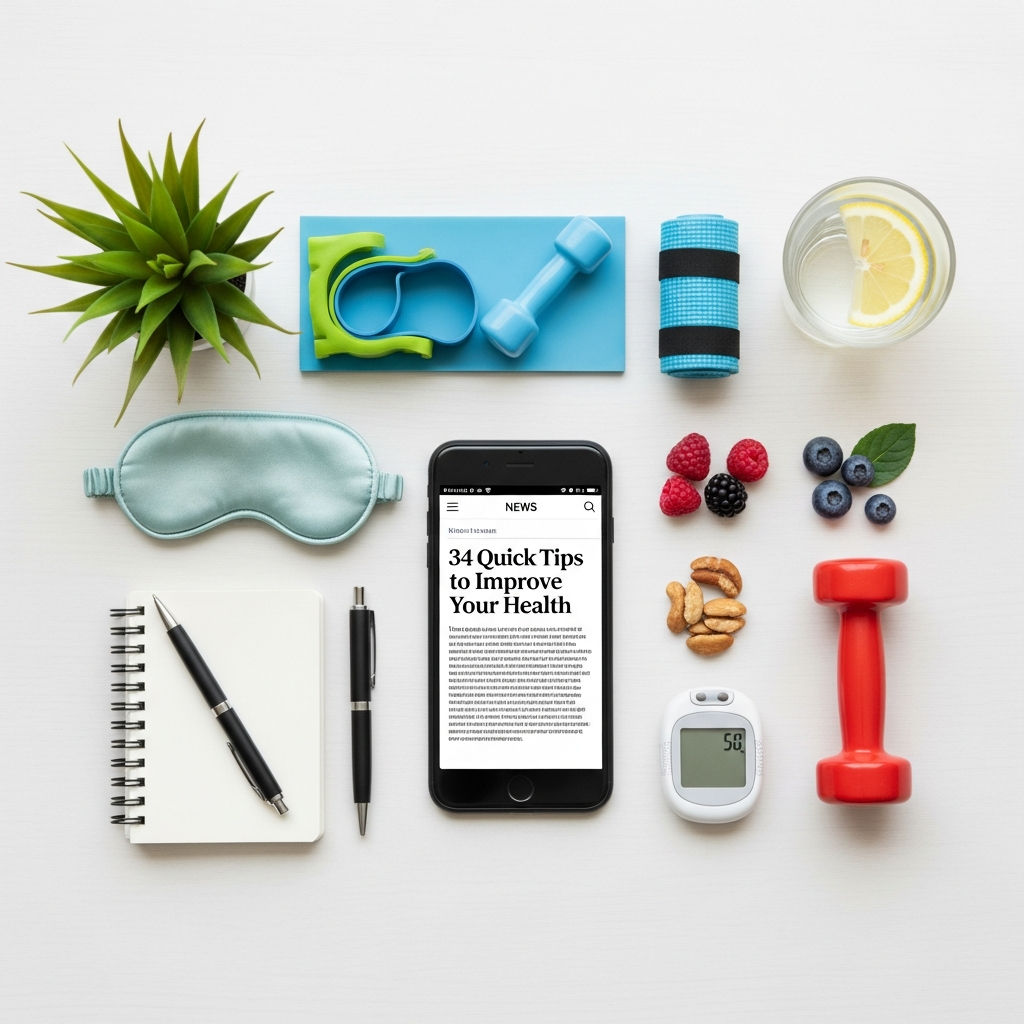
34 Quick Tips to Improve Your Health Starting Today
When it comes to improving your health, many people believe they need to undergo a massive lifestyle overhaul. They think about grueling hour-long gym sessions, restrictive diets, or expensive supplements. However, true health is often the result of small, consistent habits that compound over time. You don’t need to change everything at once; you just need to start making better choices in the moments that matter.
Whether you want to boost your energy, sharpen your mental focus, or simply feel better in your own skin, these 34 quick tips provide a roadmap for a healthier, more vibrant life. By implementing even a handful of these daily, you can significantly impact your long-term well-being.
Optimize Your Nutrition and Hydration
What you put into your body is the foundation of your health. Use these quick tips to refine your diet without feeling deprived.
- 1. Drink a glass of water upon waking: After seven to eight hours of sleep, your body is naturally dehydrated. Rehydrating immediately jumpspeaks your metabolism and clears brain fog.
- 2. Use smaller plates: This is a psychological trick that works. A smaller plate makes a portion look larger, helping you feel satisfied with less food.
- 3. Eat the “Rainbow”: Aim to include at least three different colors of vegetables in your daily meals. Different colors signify different antioxidants and phytonutrients.
- 4. Swap soda for sparkling water: Liquid sugar is one of the leading causes of inflammation and weight gain. Sparkling water with a squeeze of lime provides the fizz without the damage.
- 5. Prioritize protein at breakfast: Starting your day with eggs, Greek yogurt, or a protein shake helps stabilize blood sugar and prevents mid-morning cravings.
- 6. Chew your food 20 times: Digestion begins in the mouth. Slowing down allows your brain to receive the “fullness” signal, preventing overeating.
- 7. Limit processed snacks: If it comes in a crinkly bag and has a long shelf life, it’s likely high in sodium and preservatives. Reach for nuts or fruit instead.
- 8. Cook at home more often: When you cook, you control the ingredients, especially the amount of salt and unhealthy fats used in restaurant cooking.
- 9. Supplement with Vitamin D: Most people are deficient in the “sunshine vitamin,” which is crucial for immune function and bone health.
- 10. Add fiber to every meal: Fiber slows down glucose absorption and keeps your gut microbiome healthy. Think beans, oats, and leafy greens.
Boost Your Physical Activity
Exercise doesn’t always have to happen in a gym. Moving your body more frequently throughout the day is often more beneficial than one intense session followed by hours of sitting.
- 11. Take the stairs: It’s a classic tip for a reason. Taking the stairs instead of the elevator is an easy way to engage your lower body and get your heart rate up.
- 12. Set a “Stand-Up” timer: If you work at a desk, set a timer for every 50 minutes to stand up and stretch for at least two minutes.
- 13. Walk during phone calls: If you’re on a mobile call that doesn’t require a screen, pace around the room or walk outside. You can easily clock 2,000 steps during a 20-minute meeting.
- 14. Try 10-minute HIIT: High-Intensity Interval Training is incredibly efficient. Ten minutes of alternating between maximum effort and rest can be as effective as 30 minutes of steady-state cardio.
- 15. Stretch before bed: Light stretching helps release muscle tension accumulated during the day and prepares your nervous system for sleep.
- 16. Park further away: Force yourself to walk an extra few hundred yards by parking at the back of the lot.
- 17. Focus on functional movement: Practice getting up off the floor without using your hands. This builds core strength and mobility essential for aging gracefully.
- 18. Find an accountability partner: You are far less likely to skip a workout if you know someone is waiting for you at the park or gym.
Prioritize Mental Health and Stress Management
Physical health and mental health are inextricably linked. Stress creates cortisol, which can lead to weight gain and chronic illness if left unchecked.

- 19. Practice the 4-7-8 breathing technique: Inhale for 4 seconds, hold for 7, and exhale for 8. This “hacks” your parasympathetic nervous system to calm you down instantly.
- 20. Do a “Digital Detox” before bed: Turn off your screens 60 minutes before sleep. The blue light suppresses melatonin, and the information overload keeps your brain in “alert” mode.
- 21. Keep a gratitude journal: Writing down three things you are grateful for each day re-wires your brain to look for positives rather than negatives.
- 22. Spend time in nature: Even 15 minutes in a park can lower your blood pressure and reduce feelings of anxiety.
- 23. Learn to say “No”: Overcommitting yourself is a recipe for burnout. Guard your time like it’s your most valuable resource—because it is.
- 24. Meditate for 5 minutes: You don’t need to be a monk. Simply sitting quietly and observing your thoughts can improve focus and emotional regulation.
- 25. Socialize in person: Digital connection isn’t the same as physical presence. Meeting a friend for coffee releases oxytocin, the “bonding hormone.”
- 26. Engage in a hobby: Whether it’s painting, gardening, or coding, doing something for the pure joy of it stimulates different parts of your brain.
Improve Sleep and Recovery
Recovery is when your body repairs itself. Without quality sleep, your efforts in the kitchen and gym will yield diminished results.
- 27. Stick to a consistent sleep schedule: Going to bed and waking up at the same time—even on weekends—regulates your internal circadian rhythm.
- 28. Keep your bedroom cool: The ideal temperature for sleep is around 65°F (18°C). A cool environment helps your core temperature drop, which is a signal for sleep.
- 29. Use “Blackout” curtains: Even a small amount of light can disrupt your sleep cycle. Make your room as dark as a cave.
- 30. Limit caffeine after 2:00 PM: Caffeine has a half-life of about six hours. That afternoon latte might still be in your system when you’re trying to drift off.
- 31. Try a weighted blanket: For many, the gentle pressure of a weighted blanket reduces tossing and turning and helps soothe anxiety.
- 32. Get morning sunlight: Seeing bright light within 30 minutes of waking sets your “internal clock,” making it easier to fall asleep at night.
- 33. Take a 20-minute power nap: If you’re feeling a midday slump, a 20-minute nap can restore alertness without the grogginess of a longer sleep.
- 34. Don’t eat right before bed: Aim to finish your last meal 2–3 hours before sleep so your body can focus on cellular repair rather than digestion.
Conclusion: The Power of Small Changes
Improving your health doesn’t require a radical transformation overnight. Instead, it’s about making a series of better decisions throughout the day. By picking just three or four tips from this list and turning them into habits, you will notice a significant shift in how you feel, move, and think.
Remember, consistency beats intensity every time. Start with the easiest tip—perhaps drinking that glass of water tomorrow morning—and build your momentum from there. Your future self will thank you for the effort you put in today.